The landscape of professional wrestling has always been a hall of mirrors where reality and fiction blur until they are indistinguishable. In the modern era, however, the “game” has changed. We are no longer just looking at scripted rivalries between athletes; we are looking at the tectonic shifts of a multi-billion dollar corporate entity known as TKO. When Endeavor merged with WWE, it didn’t just change the logo on the stationery; it changed the very DNA of how a “top star” is manufactured, maintained, or, as some believe, systematically dismantled.
To understand the current friction in the industry, one must first understand the power dynamics at play in the boardroom. For decades, the creative direction of the squared circle was the whim of a single man. Today, it is a complex web of corporate interests, Hollywood talent agencies, and high-level executives who view the roster not just as performers, but as assets to be leveraged or liquidated. In this high-stakes environment, a “theory” has begun to circulate among the most observant fans: that the industry’s most prominent hero is being subjected to a sophisticated, corporate-led sabotage.
At the heart of this tension is the philosophical divide between the “Creative” side of the business—led by Paul Levesque—and the “Commercial” side, overseen by TKO’s corporate leadership, including Ari Emanuel. Levesque’s rise to power was heralded as a golden age for fans who wanted logical, long-term storytelling. He prioritized the “workhorse,” the performer who connected organically with the audience.
However, corporate entities like TKO often have different priorities. They crave the “megastar” impact—the kind of crossover appeal that only names like The Rock can provide. This creates a natural friction point. When a creative decision favors a full-time performer over a Hollywood titan, it isn’t just a booking choice; it’s a defiance of a specific commercial strategy. If that choice backfires or if a certain executive feels slighted, the repercussions don’t happen overnight. They happen through a “slow burn”—a series of subtle, damaging decisions designed to prove that the creative’s “Golden Boy” was the wrong investment all along.
How do you destroy a top star without making it look like a burial? You don’t take them off TV. You don’t stop giving them wins. Instead, you make them look incompetent. You make them look like a “fool.” In the world of sports entertainment, perception is the only currency that matters. If the audience begins to see their hero as a naive, dejected figure who is constantly outplayed by “the adults in the room,” the connection begins to fray.
This is often achieved through:
-
The “No-Show” Narrative: Building a story around a massive star who never appears, leaving the protagonist to look like they are shadow-boxing a ghost.
-
The Media Weaponization: Using “outside” personalities or broadcasters to deliver scathing, “real-world” critiques that the audience can’t help but internalize.
-
The Interference Factor: Ensuring that major losses aren’t just losses, but humiliating defeats fueled by “accidents” or betrayals that make the hero look like they have no friends and no situational awareness.
When these elements align, it creates a “lost season” feel for the performer. Even if they are the face of the company, they become the face of its problems. This isn’t just bad luck; it’s a targeted effort to crater their stock at the exact moment it should be peaking.
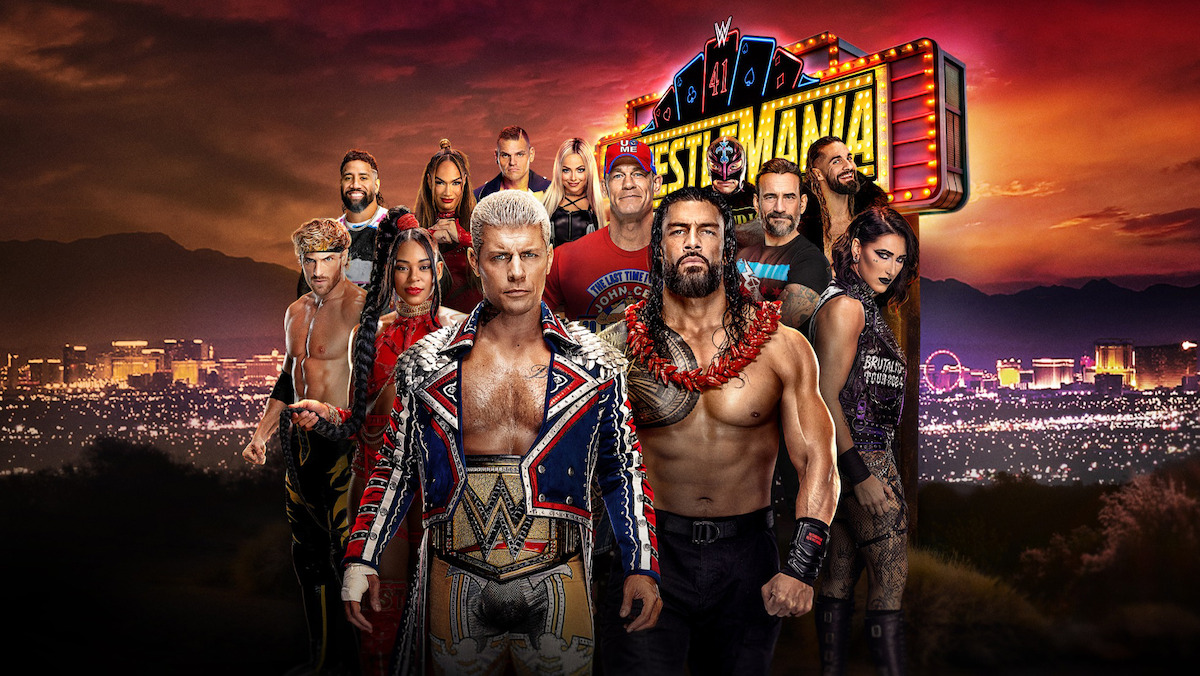
The theory suggests that this all traces back to a pivotal moment two years ago. When The Rock cleared his Hollywood schedule to face Roman Reigns at WrestleMania XL, it was the ultimate corporate dream. It was the match Ari Emanuel wanted. However, the fans revolted, and Paul Levesque pivoted, choosing to “Finish the Story” with his own chosen protagonist instead. While that moment provided a cathartic “happy ending,” it reportedly left a sour taste in the mouths of those who prefer the glitz of Hollywood to the grit of the ring.

And so, the “punishment” began.
For two years running, this protagonist has been made to look like a shadow of his former self. It started at Elimination Chamber 2025, an event where The Rock, John Cena, and Travis Scott effectively humiliated him. The narrative was supposed to lead to a massive showdown at WrestleMania 41 between the hero and a newly heel-turned John Cena, presumably with the backing of The Rock and Scott.
Instead, the hero was left “holding the bag.” The Rock was a no-show, a move that effectively torpedoed the event’s prestige and left the protagonist twisting in the wind. The climax of that saga was a disaster: the hero lost the Undisputed WWE Championship in an unceremonious fashion after Cena capitalized on interference from Travis Scott—a low-blow “kick in the yams” that ended the reign. The image of the hero sitting dejected, “egg on his face,” after one of the most critically panned main events in history was a visual representation of his devalued status.

Now, as we approach the current year’s extravaganza, the pattern is repeating with frightening precision. The audience is beginning to turn, and the company is leaning into the negativity. They haven’t turned him heel; they’ve done something more insidious. They have recruited Pat McAfee to side with Randy Orton, the hero’s current opponent.
The justification? McAfee and Orton claim to be on a “mission to save the business” from the protagonist himself. McAfee, a powerful media voice with a direct line to the fans, has blamed the company’s creative and commercial woes on the hero, accusing him of representing everything the modern fan hates.
The conspiracy deepens when you follow the money and the relationships:
-
Ari Emanuel represents Pat McAfee.
-
Ari Emanuel is famously tight with The Rock.
-
The Rock explained his absence from last year’s WrestleMania specifically on Pat McAfee’s show.
It appears to be a closed loop of influence. By installing McAfee into this storyline, the corporate overlords have created a mouthpiece to broadcast their dissatisfaction. It serves as a quiet effort to dismantle the hero’s credibility just because, two years ago, the creative team chose him over Emanuel’s preferred superstar, The Rock.

Whether it is a series of unfortunate booking blunders or a calculated corporate hit job, the result is the same: Cody Rhodes is being framed as the problem rather than the solution. As the road to WrestleMania looms, the question remains: is he fighting Randy Orton, or is he fighting a boardroom determined to see him fail? In the end, this “conspiracy” suggests that finishing the story was the easy part; surviving the corporate aftermath is the real battle.